We are so honored to receive this award from Slow Food Greater Olympia! Good food means so much to us, for ourselves and our community ❤ We appreciate the recognition!
Join us in congratulating Urban Futures Farm on their Snail of Approval award!
Urban Futures Farm, located in Olympia, is an ecologically grounded, diversified, solar-powered farm dedicated to growing the highest quality food possible for their immediate neighbors through a CSA program and on-site farm stand.
We’re impressed with Urban Futures Farm’s focus on growing delicious, nutrient-dense food by building good soil and practicing crop rotations and integrated pest management. Over time, they have built robust agricultural soil through the use of cover crops, green manures, quality compost, and targeted application of essential micro and macro nutrients. Want to learn how to build amazing soil? They host workshops led by TJ Johnson, their full-time farmer and former food and agricultural policy visiting faculty at The Evergreen State College.
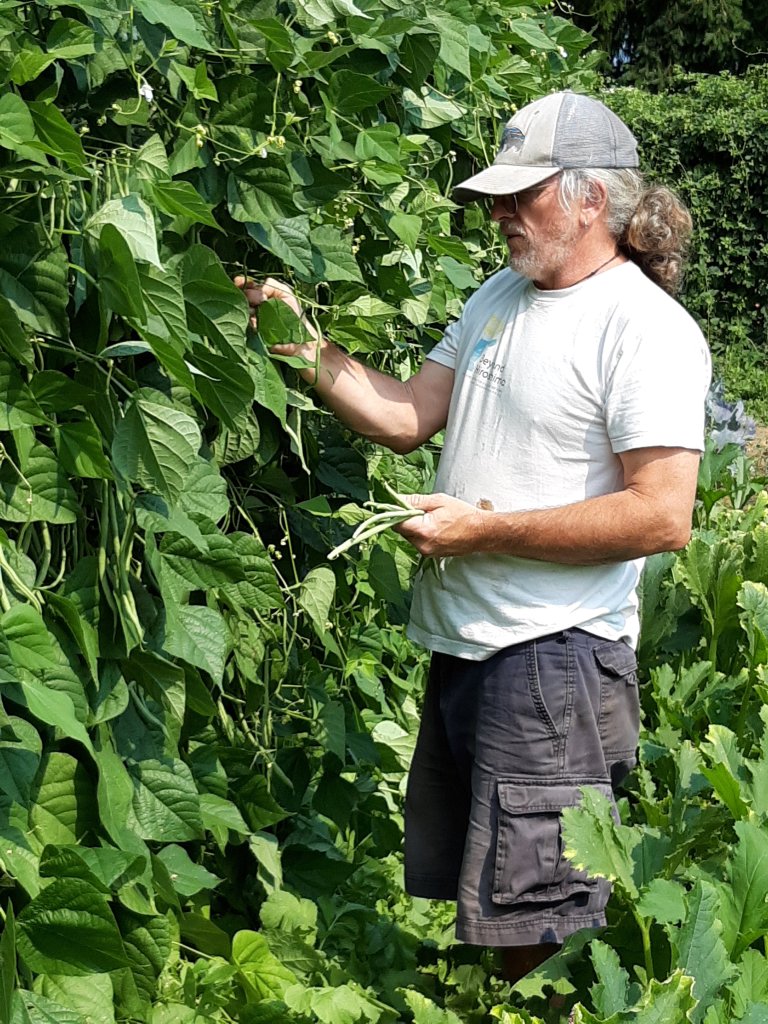
The farm has grown various Ark of Taste varieties of fruits and vegetables, including Rockwell beans, Speckled Trout lettuce, Ozette potatoes, Incillium garlic, and more. They also grow a wide variety of vegetable and herb plant starts each spring, and produce pastured eggs.
The farm has cultivated deep community connections. They donate food to the Thurston County Food Bank and to Senior Services for South Sound, host interns and WWOOFers on the farm, and organize a yearly music festival on the property that raises funds for farmland preservation.
We’re delighted to welcome you to the 2025 Snail of Approval cohort, Urban Futures Farm! We’ll see you there.
Spring has arrived! Hummingbirds are hovering around the Red Flowering Currants, the Pacific Chorus frogs are singing their love songs, and local nurseries are filled with six packs of flower and vegetable starts.
It must be time to purchase plants and put them into your garden, right? Not necessarily.
There are a number of things to do before purchasing plant starts and putting them in the ground. Weeds need to be pulled, compost and fertilizers need to be added to the soil. And the weather? Well, let’s just say that we are not out of the woods yet. There are still plenty of chilly nights and freezes to come.
If you have a greenhouse or a cold frame you could purchase plants and hold them until the danger of frost has passed. But if you don’t it probably makes sense to temper your enthusiasm and hold off a bit longer.
But what if the plants I want won’t be available if I wait? Don’t worry – we have you covered!
Long time customers of Urban Futures Farm know a little secret – we sell the highest quality most affordable vegetable and herb starts in town. And we only sell them when it’s the right time to go into your garden.
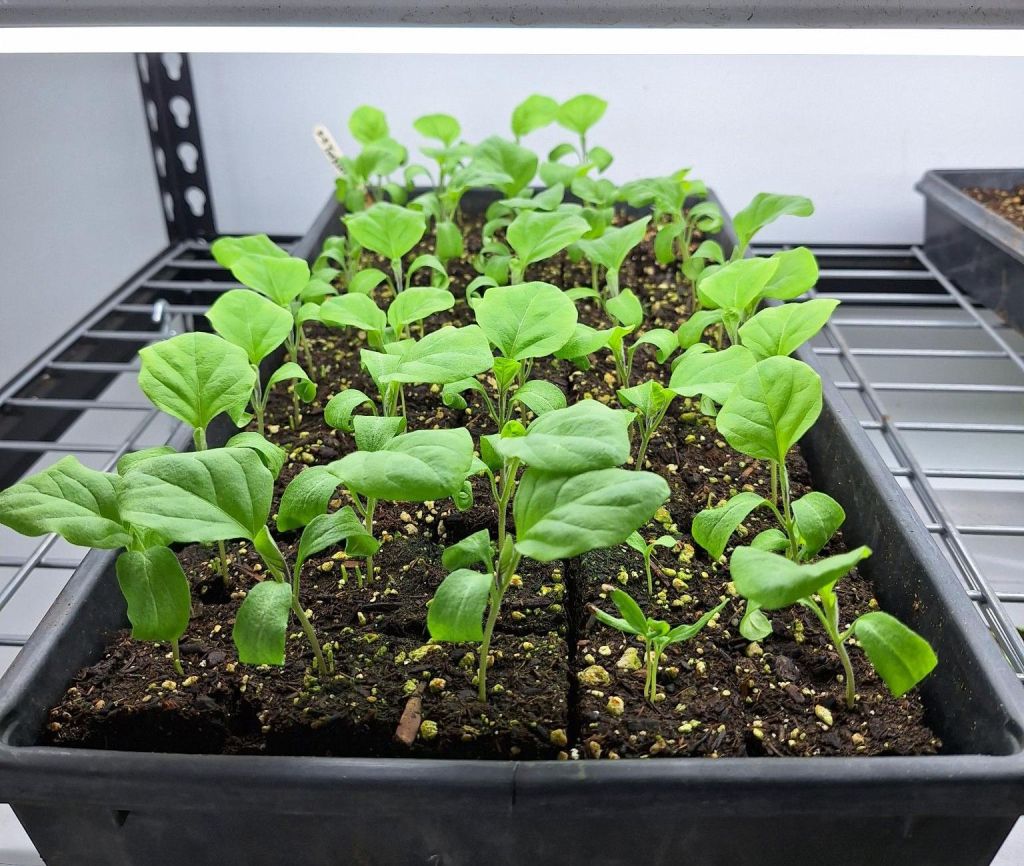
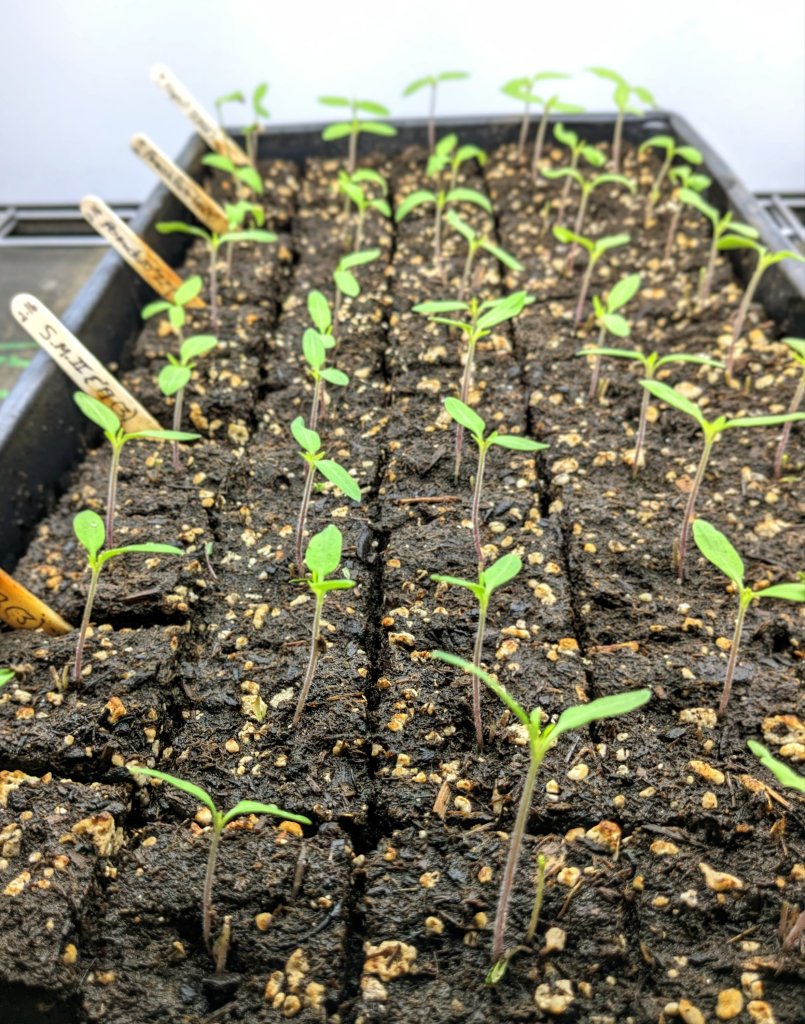
Our propagation room is filled with seedlings in various stages of growth that will be ready for our annual vegetable and herb starts sale starting in April. And we are planting more every day. If you want find the varieties best suited to our region, grown in high quality soil by an experienced farmer then mark your calendar and plan to swing by the farm on Saturdays and Sundays in April and May.
We will put out a list of available plants each week, but you can expect to find a wide range of all of your favorite vegetables and herbs that will roll out as weather conditions dictate.
So, hang tight, get your gardens cleaned up, fertilized and ready to go, and we’ll see you at the farm in a few weeks.
We are super excited to announce the fifth anniversary of FarmFest, our solar-powered celebration of music and community at Urban Futures Farm in Olympia July 25- 27!
It’s the 10th anniversary of Urban Futures Farm Farm (and Loki’s 10th birthday!) and the 5th anniversary of FarmFest. Let’s make this one special!
Discounted Early Bird Tickets, and a limited number of camping passes, are on sale now.
Our 2025 CSA is nearly sold out – less than 5 shares left. To secure your fresh, local summer food supply sign up HERE.
There are also a few seats left in our Spring class – Growing Vegetables in the South Sound: A Workshop for Gardeners Of All Levels. To sign up contact TJ at urbanagrarian@comcast.net
Saturday, March 15 and Saturday March 22, 1-4pm at Urban Futures Farm, 928 Wilson St NE, Olympia
Worried about where your food will come from in these challenging times? Always wanted to start a vegetable garden, but don’t know where to begin? Had a vegetable garden but have not been happy with the results? Been gardening for a while and want to take it to the next level? This workshop is for YOU!
Over the course of 2 afternoons, we will explore everything you need to know to grow a successful home garden. The workshop will be a mix of lecture, discussion and hands-on demonstrations. Topics covered will include:
Site Selection
Understanding and improving your soil
Selecting seeds
Propagating, transplanting and direct seeding
Rotations and companion planting
Selecting the right tools
Irrigation
Composting
Dealing with weeds, pests and disease
Season extension
The workshop will be led by TJ Johnson. TJ has been growing his own food for over 35 years, including the last 10 years as the owner of Urban Futures Farm, a regenerative, community-focused farm in the heart of Olympia.
The cost for the workshop is $60. To register, send an email to urbanagrarian@comcast.net. Payment will be accepted at the first class, either cash or check.
We are now accepting new members for our 2025 Community Supported Agriculture (CSA) program. Shares are limited, so if you are interested don’t wait too long to signup.
Over the past few weeks, I’ve been focused on one of the most important things I do as a farmer – plan for the coming year.
This process starts with determining what crops will be grown in which beds. In order to break up pest and disease cycles, we never grow the same crop in the same bed two years in a row. Different crops have different rooting depths and nutrient and fertility needs, so crop rotation is also important for maintaining maximum fertility throughout the farm. We like to use a two or three-year rotation, meaning that we don’t grow crops in the same family in a particular bed without a two- or three-year break. With over 60 annual vegetable beds at the farm, you can imagine this is quite a puzzle to solve.
Once I’ve decided what crops will grow where, using big laminated graph paper and dry erase markers, then all of the information gets translated to an Excel spreadsheet. The spreadsheets show which crop goes where, when it will be planted, how far apart each plant will be, how many plants will be in each bed, and when the crop will be harvested (ideally – nature does not always cooperate).
Then comes the fun part – selecting and sourcing the right seeds. Not all broccoli, cabbage or tomatoes are the same, and choosing the right varieties to grow is essential for a bountiful harvest. After 10 years of farming, I have a pretty good idea of what works, but there are always new varieties to consider.
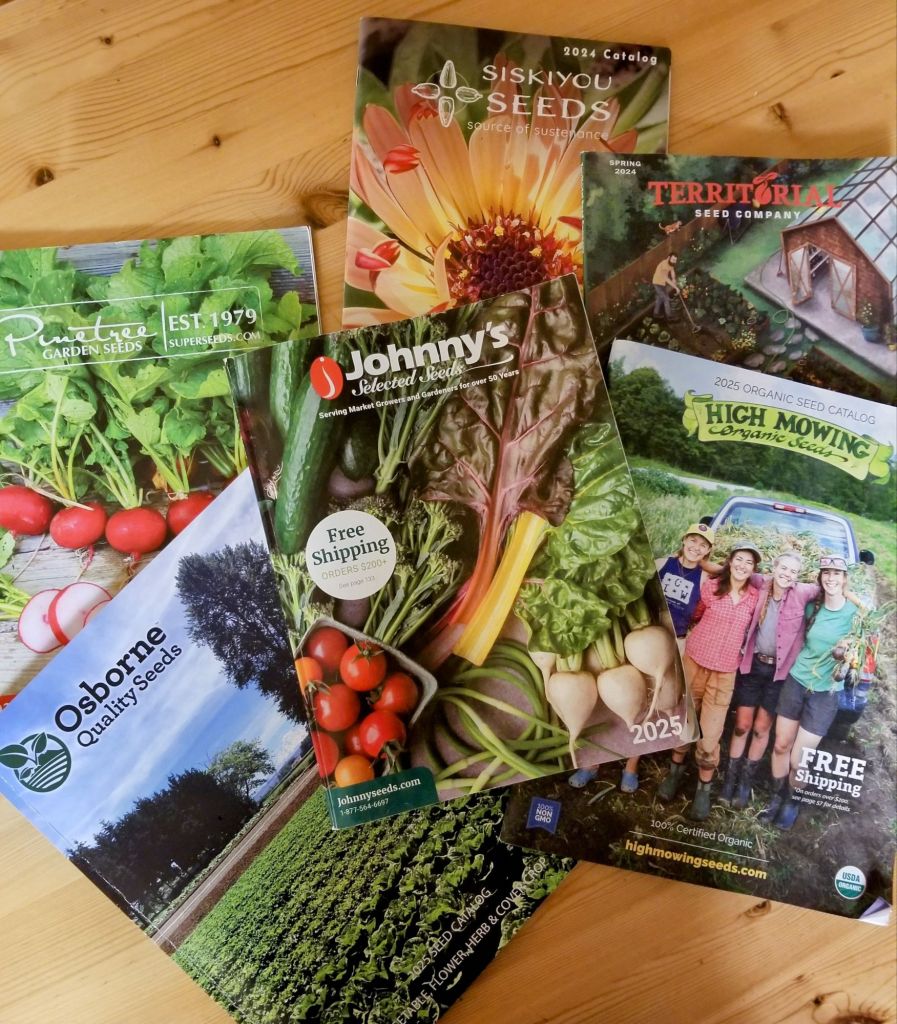
I purchase most of my seed from Johnny’s Seeds and Osborne Seeds, but on occasion also buy from Territorial, Baker Creek, Adaptive, High Mowing, Pinetree and Siskiyou. This year I have also been looking into several small Washington-based seed companies – Saltwater Seeds and Uprising Seeds.
Prowling through seed catalogues is fun, but can also be overwhelming, as you compare different companies, different varieties and different prices. One of my pet peeves is that some companies price based on the number of seeds, and other by weight, so I constantly find myself comparing whether Johnny’ Lacinato kale, priced by the number of seeds, is more or less expensive than Osborne’s Lacinato priced by the ounce (yes, you need to determine how many kale seeds are in an ounce!). Some companies are worse – they don’t even tell you how many seeds are in a packet.
One thing has been very obvious this year. The price of seeds has increased dramatically. In some cases, its more than doubled over the last year! Several varieties I have purchased in the past are identified in the catalogues as not available due to “crop failure”. At a recent conference, when I spoke with several seed reps from different companies, they all had the same explanation for higher prices and limited availability: Climate Change.
As someone who has actively paid attention to Climate Change since the 1980’s, I’ve understood that a warming planet would reduce crop yields. I had never considered its impact on seed yields, but reality has set in fast. Increased wildfires, hurricanes, tornadoes and flooding are reshaping farming realities today, and will continue to do so long into the future.
Over the past few years, I have also noticed a disturbing trend in seeds – germination rates are falling. Germination rate is the number of seeds that actually germinate. For example, a germination rate of 90% means that 9 out 10 seeds will germinate. It used to be that it was rare to see germination rates of less than 80%. Last year some of the seed I purchased had germination rates less than than that same variety had in previous years. For some things I was seeing rates less than 70%. This means you have to buy more seed to wind up with your desired number of plants, which also increase costs. Not all seed companies tell you the germination rates in their catalogue, or on the seed packet. Look for companies that do – like Johnny’s and Osborne.
So, what can a farmer or gardener do? First, secure the seed you need for next year soon, when it is still available. Look for high germination rates. Consider purchasing seed not just for next year, but for the several years into the future. Most seed can keep for multiple years if stored properly. For more information, check out the Cornell Small Farms publication on seed storage.
When purchasing seed, always buy from reputable companies who do not sell GMO seeds, and who have taken the Safe Seed Pledge. All of the companies identified above are in that category.
You might also consider saving some of your own seed, but this is a very complicated process, depending on whether the seed is an open pollinated variety or hybrid, and whether you have sufficient distances to ensure no cross pollination. A great resource for seed saving is Seed to Seed, by Suzanne Ashworth.
Healthy people need healthy food. Healthy food depends on high quality seeds grown in healthy soil. As I noted in a previous blog post, the price of food will likely go up next year, and there is a very real potential we will see food shortages if the incoming administration follows through on its dangerous policy agenda. Don’t get caught unprepared.
Perhaps you have been feeling the same way I have since the election. I find myself swinging back and forth between the desire to sell everything I own and crawl into a hole for the next few years (or move to Costa Rica), and resolved determination to fight back and actively resist whatever Trump and his unfolding rogues gallery of cabinet appointees throw at us.
This weekend I experienced two things that encapsulated this dichotomy, and brought a clearer focus on the path forward. I was in Vancouver, WA to attend the 50th anniversary of Washington Tilth. Tilth is an organization that brings together farmers, gardeners and eaters to create a more sustainable food future.
The night before the conference I spent the night in a hotel, and did something I rarely do – watch television (we have not had cable TV in nearly 30 years). Unable to sleep, I found myself binging on cable news, stunned by report after report of why Trump won, what might happen next, and the parade of unqualified and dangerous lunatics he is surrounding himself with to enact his agenda. After several hours of this, I found myself depressed and despondent, ready to sell the farm, liquidate our assets and flee the country as soon as we can.
Then I arrived at the Tilth conference. As the day (and weekend) unfolded I found myself energized by the presentations I heard and the conversations I had. Here was a community of people of all ages from throughout Oregon and Washington who, while not ignoring the larger political/social context, were committed to working together for a better future. They were committed to farming sustainably, to feeding their communities safe, nutritious food, and to engaging in the grindingly slow process of political and social change. I left the conference feeling energized, and with a long list of things I need to do to be a better farmer, teacher and community member.
So, what did I learn from this process? First, to quote the lyrics of a Lucas Nelson (Willie’s son) song, “turn off the news and plant a garden”. Mainstream news thrives on conflict, which translates into fear and paralysis. Don’t get sucked into the rabbit hole. Be a savvy news consumer. Don’t spend too much time in that world. Look for reputable sources across the political spectrum that provide well-researched, thoughtful analysis.
Second, spend most of your time doing things that give you energy, physically and emotionally. Make more time to walk, run, hike or exercise in whatever way works for you. Science is clear – physical activity reduces stress. Spend more times with friends. Science also tells us that social connection helps maintain and improve mental health. Seek out, support and get involved with organizations that you believe in. Collective action is not only individually empowering, but our best chance for social and political change.
Its easy to go through life on auto pilot when everything is going well. Things are definitely not going well, and to ignore that reality or let it demoralize and paralyze you is dangerous, individually and collectively.
In whatever way works for you, vow to become part of the resistance. It won’t always be easy. But we need each other, now more than ever.






 urbanfuturesfarm.com